Saturday, December 22, 2012

Invisibles: Turned out nice

Is AllNOW love.


Tuesday, December 18, 2012

The conspiracy and me

I love a decently weird conspiracy theory as much as everybody else, and at one time I really did almost believe there was one giant vast conspiracy, involving grey aliens and men in black, that was responsible for everything that was bad in the world.

But ever since I started being accused of being part of that conspiracy on a daily basis, I find it a little harder to believe.

Of course, I would say that, wouldn’t I?


Conspiracy theories are obviously attractive – imposing a narrative on random events can help make sense of those events, especially when they have tragic consequences. Terrible things can’t just happen because somebody fucked up, or wasn’t paying attention, or was having a wank when they shouldn’t have been, there must be a reason behind it. There has to be meaning.

And they certainly have some elements of truth (and it’s entirely possible that the most unlikely theories are actually totally true, because the world is just that weird sometimes). Nobody believes it was just one gunman on the grassy knoll, but that doesn’t necessarily mean that JFK was killed in a vast conspiracy involving the CIA, the Mafia and Nazis.

In the mind of the hardcore theorist, 9/11 is a symbol of unrestrained government power, Roswell represents the most terrible of secrets and Marilyn Monroe’s death showed that even the world’s most famous woman wasn’t safe from hideous and powerful forces.

They’re all good stories, even if the truth is almost always a lot messier, and far less interesting.


Strange events invariably occur around a world-changing moment, and can appear as proof of some terrible conspiracy. Unfortunately, explanations can often end up being a bit stranger – and more mundane – than expected.

Errol Morris summed this all up nicely in a short film he did about the Umbrella Man and his connection to the John F Kennedy assassination. After decades of assumptions and conjecture, it turned out the man who raised an umbrella on a sunny Dallas day in November wasn’t concealing a gun, or signalling for somebody to open fire. He was just making an obscure point about the dangers of political appeasement. Nobody could have predicted that, and it’s so dully unlikely, nobody would ever make it up, giving it the ring of truth in the white noise of speculation.

Even the smartest of us can see patterns where none exist. Noam Chomsky is a fabulous thinker – on both language and the merits of human compassion – but there is still a moment in the Manufacturing Consent film documentary, where he talks about a systematic suppression of certain information by major media outlets, and comes to the logical conclusion that there is some kind of collusion going on, because that’s the only way to explain the numbers he comes up with.

The only person to argue against his point in the film is a senior journalist who points out that omission or misreporting was almost always down to some kind of fuck-up, rather than some grand plan. He says you can’t get five people working in any newsroom anywhere in the world to unequivocally agree on anything, let alone systematically defraud everybody about everything.

But Chomsky was right and could prove it with evidence, because he was coming from an academic background, where it is perfectly acceptable for a Phd student to spend days or weeks or months tracking down the right reference, digging up the right data, and cross-checking it over and over again. And he was applying that kind of thinking to an environment where nobody wants to get their facts wrong and barely consider any political agenda, but damn it, the subs need page three right fuckin’ now, and people working under that kind of time pressure do make mistakes, and omissions, and the facts might come out unbalanced, one way or the other, because no system is in perfect equilibrium.

Of course, I work in a daily newspaper newsroom, so I’m obviously part of the problem. But if I was guilty of all the bias I’m accused of on a daily basis by our beloved readers, I only got one question: Where’s my fucking cheque?

 
I have some friends who still go on and on about things like remote viewing and hidden aliens when we’ve all had a few beers, and it’s not as easy to smile and nod politely as it once was.

The fevered righteousness of many theorists can be deeply off-putting. Room 237 – the documentary about the theories surrounding Kubrick’s The Shining - almost lost me when one of the contributors starts talking about how he is being followed by the Government because he’s proven that The Shining is Kubrick’s attempt to reveal he faked the moon landing footage, and they’re scared of him exposing the truth, and it’s s bit of a sour taste in a relatively sweet doco.

I put up with it, because I’m sure there were times when I shared the same ideas, even if they just seem more and more implausible and silly every year. I also put up with them because they’re often terrific fictional stories.

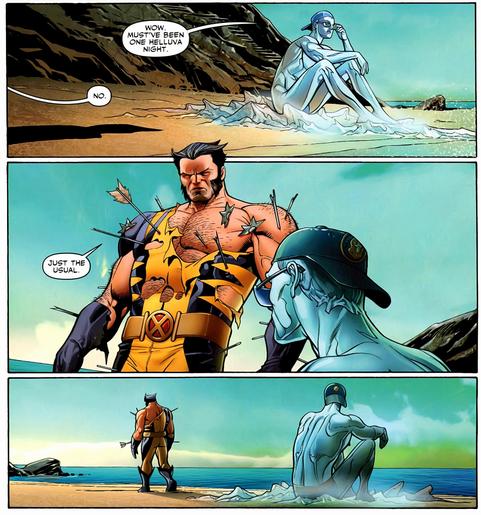
As long as you don’t actually believe they’re true, conspiracy theories can be vastly entertaining. The X-Files was way too serious for me, but tapped into pre-millennium paranoia with a deft hand. I loved the ‘What if all the theories were all true’ attitude of The Invisibles, (and I admit I’m watching that clock nervously). And I think the Big Book of Conspiracies is the single best thing in DC’s fucking excellent Big Book series.

After all, it’s aliens and other vast, eldritch forces imposing their wills on a blind humanity. They’re stories of brave individuals who exposed the truth, often with tragic (and poetic) consequences, and they show that the universe isn't a meaningless series of events. 


Yesterday somebody rang up the newsroom to tell me I obviously had a pro-Government agenda because one of the 200 headlines we had on the site that day said ‘rail loop’ instead of ‘rail link’, and the day before I got an email telling me that the climate change story I’d put up on the website was obvious proof of a socialist agenda, and I can’t tell what side I’m supposed to be on in the situation on the Gaza strip this week.

So I obviously can't be trusted.

But that doesn't mean I can't enjoy a good spooky story or two.

Friday, December 14, 2012

Positive bleeding! (Three examples of expressing the love in a way that is equally rewarding)


Sometimes it feels like our entire culture is choked with snark – as if the default option is to sneer and show everybody how smart you are by pointing out flaws in things and saying everything sucks.

And while that can be fun, especially when somebody gets their critical teeth into a sacred cow, I enjoy the love even more. I’m far more interested when somebody like Tim O’Neill finds the sublimein the Age Of Apocalypse, than when he spends 3504 words pointing out that Doctor Who is a bit daft.

I’m always up for a bit of a moan myself, but I always like trying to explain what I felt when I saw or read or heard something that moved me, or thrilled me, or affected me in any positive way.

That’s one of the main reasons for this blog, and here are three examples of what I’m trying to do – three examples when all cynicism was banished, and a passionate argument was made for brilliance, and pure love was unleashed:


Example #1:Charlie and The Wire

The Wire can be a hard sell to people who have never seen it before, and I’m still a little surprised by how many people haven’t seen it yet, no matter how many times they get told it is the Best Thing Ever.

It was four seasons down before I got into it, and that was after a couple of years of endless praise, years where trusted critics kept saying – over and over again – that it was one of the greatest things shown on television since the first TV screen flared into life.

There was definitely a cumulative effect here – if enough people say something is truly great, the temptation to check it out can be overwhelming. And it can take just one last piece of gushing admiration to finally commit.

I know exactly what that one last piece was for me. It was this three-minute and 57 seconds video:


Charlie Brooker is a marvellously cynical British writer who only gets away with it by being totally self-aware and genuinely funny. His columns and TV shows are mercilessly humourous, pouring scorn on deserved targets and despairing at the most obvious examples of extreme stupidity in modern culture. I scorched through his Dawn of the Dumb book while motoring around the UK, and I think his Black Mirror series was some of the most wonderfully intense television put out in the past year..

In his most recent columns over the past couple of years, he has gone for the cheap laughs by playing up the part of a grumpy old bastard, to the point where people are convinced he hates absolutely everything, but sometimes Brooker lets the mask slip, and he can’t stop himself from raving about something brilliant, and he’s bloody convincing when he does it.

So when he told me The Wire was even better than Deadwood – and you cocksuckers should know I liked Deadwood – I fuckin’ listened. That segment, which was part of one of his Wipe programmes, is unequivocally positive. He shows that it was more than just a cop show, and that it’s saying something profound about the American psyche, and that it’s funny and emotional and dense, and he does it in less than four minutes.

When Brooker says that if you like good drama, you have “absolutely no excuse for not indulging in this”, he is worth listening to. Because he was right, and now I’ve become that guy who lends all five seasons to my mates, and then gets frustrated when they only get a couple of episodes in. Because, like Brooker says when he runs out of nice things to say, it really just is fucking brilliant


Example #2: Vincent and The Doctor

One of the things that can drive me crazy about Doctor Who over the past few years is that there can be perfectly competent and average stories that still manage to have moments of brilliance. There can be even be entire episodes of dull, repetitive and silly plot turns that are redeemed by one of these moments. Moments where somebody shows compassion when they don’t have to, or when something really clever happens.

Moments like the bit on the roof in The Eleventh Hour, when Matt Smith introduces himself properly, or the moment in Christopher Eccleston’s final story where his hologram turns to look at Rose, or the bit where the Tenth Doctor stands in the rain at Journey’s End.

Vincent and The Doctor – starring the towering Matt Smith as Doctor Who and written by Richard Curtis – has a completely okay plot, (it does, after all, focus on a hunt for a giant alien chicken), with a stunning moment of lovliness at the end, when Vincent Van Gogh gets a look at his legacy.

And Bill Nighy – often the undoubted best thing in every movie or show he appears in – delivers a passionate ode to Van Gogh, praising the artist for taking some terrible pain and creating paintings of exquisite beauty.

I can’t embed a video of it, but here is Nighy’s full speech, after being asked how Van Gogh rates in the history of art:

“Well. Um, big question, um, but to me, Van Gogh is the finest painter of them all. Certainly the most popular great painter of all time. The most beloved. His command of colour, the most magnificent. He transformed the pain of his tormented life into ecstatic beauty. Pain is easy to portray but to use your passion and pain to portray the ecstasy and joy and magnificence of our world. No one had ever done it before. Perhaps no one ever will again. To my mind, that strange wild man who roamed the fields of Provence, was not only the world's greatest artist but also one of the greatest men who ever lived.”

Crikey.

I love that speech.

I need a moment.


Richard Curtis made Love Actually, (where, again, Nighy was the best thing by far), so he knows all about oversweet sentimentality, but sometimes I don’t care. I’m up for some naked sentiments now and then.

And he’s talking about Van Gogh, who I’ve always loved, but I have never found the words to explain that love.It's art talking about art, and articulating something I never could. In a TV show about a madman in a box chasing a big alien chicken.


Example #3: Joe and the good food

My parents weren’t ones for variety in their food when I was growing up, which meant that 90 percent of the dinner meals I had as a kid consisted of spuds, peas and some kind of meat. I didn’t eat proper pasta until I was eighteen, and didn’t start eating rice regularly until I was well into my thirties.

But in the past couple of years, I’ve eaten snails in Paris and goulash in Budapest. I’ve tried the Osaka pancake and fermented horse milk in Mongolia. I’ve also racked up five Michelen stars while living in a country that has none. Three of those stars were in one restaurant, where the wife and I paid $1800 for a magnificent 14-course meal by Joel Robuchon.

Like a lot of things in life, this is all Joe Rice’s fault.


The Reverend Colonel Joe Rice is one of the very few people that I know over the internet that I have actually meet in real life - the internet breaks down those geographical barriers, but New Zealand is still fucking ages away from fucking anywhere – and I got completely rotten drunk with him and the mysterious Mr F in a grotty New York bar one night in 2007. I can’t remember much about that night, except that I kept getting confused about tipping etiquette and that my Werner Herzog impersonation needed work.

The other thing I remember about meeting Joe that day was the way he totally turned me into a newbie foodie. Well, it was mainly the wife and her insatiable demand for new taste sensations  – she loves her food and that love is infectious. I got her a 3kg piece of good steak for her birthday recently and instantly became the Most Popular Husband On The Planet, and we've been married six years now and I've tried more new food in that time than the rest of my life put together.

But on that overcast day in New York, Joe told the wife and I about his experience at a Michelen-starred restaurant he went to in Copenhagen, and by the time he was finished talking, I was finally sold on the concept of fine dining.

He talked about the way the wines with the sixth course brought out the lingering flavour of the third course, and the way the entire degustation process was so exciting, and the food so good, he couldn’t stop sweating.

When somebody tells you about a magnificent experience they had, the only natural response is to go and copy them. And now I’ve had those kind of meals that Joe was talking about, and I get the idea of what he was saying.

I still got a lot of work to do on my food snobbery, but I'm getting there, and it all started in that New York bar.

That's it. That's what I'm going for on the blog - because I feel the same way about the long-term story arc in Judge Dredd just as much as Charlie Brooker loves The Wire, and I love the Invisibles as much as Bill Nighy loves Vincent, and I adore the New Warriors just as much as Joe Rice likes his fancy food.

No wonder I won't shut up about them.

Monday, December 10, 2012

Boardwalk Empire: I’m in love with Richard Harrow


My wife thinks I’m in love with Richard Harrow from Boardwalk Empire, because I keep talking about how noble and sad and brilliant Richard Harrow is, and I keep sending her texts about Richard Harrow that say things like HOLY FUCK RICHARD HARROW JUST KILLED THEM ALL TO SAVE A LITTLE BOY and I WOULD TURN GAY FOR RICHARD HARROW.

So yeah, she’s totally right. I am in love with Richard Harrow.


I overdosed on Boardwalk Empire recently, watching all of the latest season in less than a week. It was a show that always felt richer if you let a few episodes build up, but I didn’t realise the season was almost over until it was almost done, so did the whole thing in one straight shot.

Watching two episodes a day might be the optimal way to see Boardwalk Empire, the tension never flags and the story motors along at speed. It’s a television show that can get unashamedly over the top with the sex and violence and intensity, but can also take a long time to get to the point.

I watched almost all of the late at night, around the Witching Hour, which wasn’t always the best idea, with one episode – the one that ends with a main character delivered in a box – giving me terrible nightmares that evening.

But I’ve always thought of bad nightmares as good signs of effective entertainment – if a story can upset up on that kind of subconscious level, it must be doing something right. Boardwalk can get downright nihilistic at times, especially when the body counts start to rise, and it’s still surprising, and enjoyable, to see something like that in a TV show.

And after two seasons of tantalising brilliance that was often buried in clumsy, obvious mush, Boardwalk Empire got a lot of things right in its third year.


Boardwalk Empire has always been beautifully shot, right from the Scorsese start, but sometimes the camera placements and lighting were just a bit too obvious. Not as painfully obvious as, say, the soundtrack to a Zach Snyder film, but almost exactly what you’d expect from an ultra-violent gangster flick.

After a couple of years of this, the homaging of older works is still there, but the show makers are just gleefully giving in to it. The opening few minutes of the last episode alone has homages to half a dozen great filmmakers, and it’s hard to hate that too much. (To paraphrase Sean T Collins, whose analysis was always the first thing I read after watching an episode, "Full Peckinpah! Full Scorsese! Full Coppola!Full Silence of the Lambs!")

Especially when the production design is so lush, and the landscapes so wide and open. It should also be noted that for a weekly genre television programme, it has some surprisingly courageous camera movements, talented and experienced HBO directors breaking down basic rules around blocking and light sources, finding the sublime shot in a world of gangsters and betrayal.

 
All of this would mean nothing without a solid narrative. Fortunately, the narrative meat of the story, which has long marinated in its own juices, finally gets a decent tasting. Boardwalk Empire is unashamedly Epic, a story of kings and king-makers, full of assassination, intimidation and deal making with the highest possible stakes. When Nucky’s plan all pay off in the final episode, I can’t tell if it’s a last minute gamble that happened to pay of, or long-gestating schemes that just happen to pay off.

That kind of dead-serious storytelling can awfully worthy and wordy, but Boardwalk can also be incredibly funny. Sometimes its deadpan seriousness is the funniest thing in the world – Michael Shannon’s barest twitch is hilarious – and sometimes it’s just sublimely silly – like when Stephen Root leans in to whisper a name in James Cromwell’s ear.


A lot of the humour and humanity in the sprawling cast of the show is due to the wonderful cast. Fantastic character actors like Root or Cromwell get a couple of scenes and show everybody how this acting thing is done, but there is also Michael Stahlberg’s Arnold Rothstein and the way he stands there with a cup of tea, a fixed smile and a murderous stare; the great Stephen Graham doing another charming psychopath with a heart; and Michael K Williams with his smirk-of-a-thousand-meanings.

Steve Buscemi still takes scenes that you always know are coming, and overcomes the cliché and delivers something unexpectedly real, while Kelly Macdonald is fantastic when she can’t help calling someone on their bullshit (even if she only gets to do it about twice a season).

The cast is full of charming people who hide their ugly sides beneath sharp haircuts and sharper suits, but it’s the broken ones who are the most fascinating, the ones who try to find a place in a world they can’t connect with. Broken ones like Richard Harrow.

Richard Harrow – as played brilliantly by Jack Huston - went away to war and got half his face blown off. He thought it also blew away part of his soul, but it’s still there, he just can’t connect with people.

It’s still there because he’s trying – so hard – to connect, and sometimes he fails, and he is made to feel foolish. And sometimes he receives a kind word at the right time, and he actually feels something far better.

The great tragedy of the character is that his inability to connect with his fellow man makes him the ultimate killer. He doesn’t necessarily wants to kill anybody, but if he has to, he’ll act without any hesitation or remorse. He’ll walk into a house full of gangsters and kill everybody in it, quickly and methodically and efficiently.
 
Huston is surely destined for better things, and even though the blank stare of his mask does a lot of the work, the way he moves around a room, or grits his jaw in silent determination, or stares out at the world through one good, lonely eye, makes him the most compelling character in a story that is full of them.


It’s been a great year for serial television drama, with shows like Mad Men, Game of Thrones and Breaking Bad all providing some stunning moments, and Boardwalk Empire is as strong as any of them. It’s a lot less self-conscious than it needs to be, and approaches greatness on a weekly basis.

It’s not just because of Richard Harrow, but he certainly doesn’t hurt.


I’ve also been catching up on Breaking Bad over the past few weeks, and have nearly totally caught up on that, and I think I’m in love with Jessie Pinkman too, but that’s mainly because I think the boy could use a hug.

Friday, December 7, 2012

Thursday, December 6, 2012

A life of Kubert

The first comic I ever read all the way through, from start to finish, and understood all the words, was an issue of the Unknown Soldier. I was about five. This is 1980.

I loved those DC war comics. They were simple morality tales, drenched in hard-hitting action, with powerful lessons about man’s inhumanity to man. I’m an ultra-pacifist for life, and a lot of that starts with the tales of Sgt Rock and Easy Company, and the Unknown Soldier, and Gravedigger. Once you strip away all the thrills, the comics couldn't be any clearer: ‘Make war no more’.

And they had these gorgeous covers – always well-put together and exciting, capturing a moment of crazy action at its height. Moments of tension and the blistering aftermath of a terrible battle. A snapshot of peril or sheer human terror.

I was still only five, so it took me a few years to realise that one artist did better covers than anybody else, and even though he had legions of imitators, his art was always noticeably stronger. More vividness, more power, more impact.

Joe Kubert was just better than everybody else.


In August 2012, the wife and I are travelling up to the top of Scotland, and we stop in Inverness for the night, and it’s a beautiful city - a lot more green than I expected, even if the buildings are stifling hot in the summer, because they have to survive the worst winters. It’s a charming city, steeped in history and story, and Loch Ness is right there, and I’d recommend you stop there yourself, if you’re ever in the region.

I hate it, because it’ll always be the place I was when I got on the internet and found out that Joe Kubert had passed away.


I’m on a train between Timaru and Dunedin, heading south, somewhere in 1995, and lost deep in an interview with Joe Kubert that just seemed to go on and on and on, and it’s the single best comic book creator interview I’ve ever read in my entire life.

It was always hard to find issues of the Comics Journal in my part of the world in the mid-nineties, so when I found a bunch of them for $2 each at a weird magazine store’s closing down sale, I skipped several lunches (no job at this time), so I could afford a dozen of them.

They were great issues too. They were ones that had those wonderfully long interviews with the likes of Grant Morrison (just starting out on the Invisibles), Frank Frazetta (who was too much of a man’s man to bother with anything as mundane as the actual truth) and Los Bros Hernandez (in an excellent interview conducted by Mr Neil Gaiman).

These were some of the first really big comic interviews I’d ever read and I was in comic heaven, but I still didn’t expect the one with Joe Kubert to be so fucking amazing.

All I really knew at this stage was that I’d really liked his covers as a kid. He was still a favourite artist, but probably not even in the top ten, and the Comics Journal #172 – the one with the Kubert interview - was one of the last of those cheap issues I got to.
The scenery on that train ride between Timaru and Dunedin is occasionally spectacular, but I barely looked up from my magazine for the whole three-and-a-half hour trip, because I was lost in a world of Kubert.

The interview – conducted by Gary Groth – went on for dozens and dozens of pages, and Kubert’s answers were as sharp as his artwork. There was no major hubris on his part, but he also wasn’t ashamed of his own accomplishments, and he told stories of the oldest days with a clear memory.

Unlike so many other long interviews with comic creators, legendary or otherwise, there was no arrogance, and no bitter desire to settle some scores, and no endless shilling of his latest project. There were just easy recollections and open comment, and by the time the train arrived in Dunedin, I’d read that interview twice.


Sometime after the turn of the century, somewhere in the year of the Space Odyssey, and I’m on a serious Bronze Age kick, and I’m hoovering up any Kubert comics I can get.

I also get the chance to finally read his Golden Age work, and there is a newfound appreciation for that as well. Art that once seemed simplistic now looks pure, and Kubert’s clumsy beginnings soon straighten out, as his artwork opens up and soars as high as Hawkman.

By the sixties and seventies, Kubert’s art is undoubtedly unique and always good. While he still does a mean superhero comic, (he remains the only artist who could ever make Ragman look cool), it’s his work on things like the war comics and barbarian books and the odd horror book that really shine. He also makes some of the only Tarzan comics that are ever worth reading.

Kubert's broken line is used to convey movement and power, and his tight lines with an illusion of looseness, show him picking apart the whole damn medium and putting it back together, and generating an infinite amount of influences.

He was unparalleled as a storytelling draughtsman – his work was always clear and exciting, and there is that purity again in the action scenes, or in the dreadful moments surrounding violence (nobody, but nobody, did better sweaty anticipation).

And his covers were even better, and all over the place, on all sorts of books. The only bad thing I can ever say about Kubert’s covers were that they were the first place I sadly realised that the cover artist wasn’t always the same as an interior artist.


Deep in to the 21st century, and Kubert was still nailing it, right to the very end. It seemed every now and then that he had taken some well-earned retirement, but then a new Tor comic or Jew Gangster book would show up, and show everybody how it was done.

In his last few books, Kubert had finally stripped away the last remnants of artifice – many of his final comics have been printed as simple, raw pencils, giving books like Dong Xoai, Vietnam 1965 more humanity.

Joe Kubert passed away a couple of months ago, but his artistic legacy is still alive and vibrant, and his tricks are still trotted out every Wednesday on comic book shelves.

One of his stories showed up in the very good Ghosts comic that Vertigo did a few weeks back, and there are still a few more posthumous comics to come out, and I’m getting them all, because his work is as passionate as ever, and we should savour it while it lasts.

Sunday, December 2, 2012

The deeply Creepy artwork of Richard Corben

The local library isn’t all about big,disappointing event comics. It’s also about keeping up with all sorts of decent comics that I never quite got around to buying for myself. And sometimes, just sometimes, it’s about finding something brilliant that you didn’t even know existed

Like Creepy Presents: Richard Corben, a 350-page collection of the great artist’s work for the Warren horror comics of the seventies, featuring his collaborations with writers such as Doug Moench and Jan Strnad, with much of the work reproduced directly from the original art boards.

I had no idea this had even been published, but after immersing myself in Corben’s world of airbrushed exaggeration for the past couple of days, I’m going to have to get this book for myself, because it’s just that magnificent.


I never liked the Warren horror comics as a kid. They were always a bit dirtier and clumsier than the horror comics DC put out, which were full of slicker chillers. Magazines like Creepy and Eerie were just a bit too grown-up, and the sickly colours and sicklier grey wash tones genuinely made me feel nauseous as a child.

(Interestingly, there was a lot of access to Warren comics if I did want to read them when I was growing up. This is the early eighties, and things like Eerie or Vampirella were very popular with some of my aunts and uncles, and they always had small piles of the mags lying around. They were the sort of working-class people who would never read any other sort of comic, except for the odd Footrot Flats book, but they couldn’t get enough of these mature nightmares.)

Fortunately, I’m not a kid anymore, and as pointed out recently, I’ve come to appreciate art which pushes hard into the realm of the grotesque a whole lot more. And if I was impressed by the ability of Kevin O’Neill to still gross me out with comics he produced 20 years ago, it’s even more impressive to see how Richard Corben’s artwork is still powerfully disturbing, 40 years after it was produced.


Corben has been producing his incredibly indiosyncratic comic art since the late sixties, and is still putting out some stunning work. Over the past decade, his art has popped up in several projects for the big comic companies, bringing his savage eye to characters such as John Constantine, the Hulk, Luke Cage, the Punisher and Conan. Some of his most impressive comics in recent years have been in the Haunt of Horror comics for Marvel, adapting HP Lovecraft and Edgar Allen Poe stories, and bringing decades of experience with craft and humour to these old tales.

He’s almost respectable these days, but don’t let that fool you – Corben’s comics, even ones that were created 40 years ago, are still gloriously gross, and reading the huge chunk of them collected in this new Dark Horse book is a queasy experience, but one that is still incredibly rewarding.

Sometimes, like in Jan Strnad’s remarkable Bowser story, his art is genuinely disgusting, in a way few other comic artists could ever match. Nobody does a blobby nightmare like Corben does a blobby nightmare, and Bowser’s story of a hungry creature composed of nothing but writhing tentacles, is all the more grotesque with its background of suburban blandness.


His monsters – as seen often in the new Creepy collection – are truly horrible, but everything is horrible, and his ugly humans are often worse. When people are killed or wounded, the violence is usually incredibly visceral, and puncture wounds are delivered in delicious detail – the reader can feel the impact of a blow, or the sick slice of a blade, or the tearing mess of a bullet.

And yet, even though I still see the things on these pages that so repulsed me as a kid, I now can’t get enough of it. Even with all the grossness, Corben’s style is addictive, humourous and incredibly entertaining. His art straddles a broad line between ultra-realism – there are moments when the gray wash tones make his faces look almost like photgraphs – and unashamed cartooning – there is all sorts of exaggeration going on.

These two styles shouldn’t work together as one consistent view, but they do. And this meshing of realism and cartooning is just one of many tools  the artists employs, with art that feels so natural, and looks almost effortless.


After some youthful underground work, Corben’s first major assignments were for Warren, and the variety of stories on display in the new collection give him plenty to work with. The tales are usually overwritten and stuffed with purple prose, but it’s easy enough to skip over the extraneous words, when there are so many beautiful pictures, and such a variety.

This collection of his Warren work, all in one place and so dense, firmly establishes Rich Corben as an illustrator of many talents - his use of colour still feels revolutionary and he bends the storytelling around the bizarre concepts the stories demand. He gets to draw ugly witches and unnamable menaces and space creatures and his art is soft or hard or squishy, as appropriate for each tale

There is a base Corben style, with flaky edges of his line giving his faces craggy depths, while the clothes and backgrounds share heavy wrinkles. There is also a consistent relaxation to the rules of anatomy, with massive heads and big hands, giant jutting jaws and bulging eyes.

This base style is often used to great effect, but he also softens the line, using colour to give depth and shading, or presenting it all in dark monochrome. Dipping in and out of this new collection is endlessly rewarding, with each and every page offering something remarkable.


Finding this book in the library was extremely fortunate, because it’s certainly inspired me to get my own copy, to find more hidden depths in Corben’s ugly beauty

I honestly can’t recommend Creepy Presents: Richard Corben highly enough, even if I know it’s not for everyone. The kind of thing that repulsed me as a kid and enchants me as an adult have a power that can just as easily turn off the casual reader completely.

But it’s an essential read for anyone who wants to dive deep inside the world of a modern comic master, and isn’t afraid of getting something gross (and unexpected) on their shoes.


Addendum: While we're on the subject of gloriously grotesque seventies comics, it was a terrible shame to hear that Spain Rodriguez has passed away this week. His comics still freak me out a bit, even as an adult, even with the passionate energy he brought to his work. I look forward to further interaction with his work in the future, when I've grown up a bit more. I would say RIP, but concepts like "rest" and "peace" aren't ones I have ever associated with Spain...


Wednesday, November 28, 2012

X-Men: Schism/Avengers X-Sanction: Editorially driven (into a tree)

I rely on the splendid local library system to keep track of the big Event Comics from Marvel and DC these days, partly because they would cost hundreds of my pathetic NZ dollars to keep track of it all, and largely because these comics are just not worth those hundreds of pathetic dollars.

There is still a bit of the Marvel zombie and DC fanboy nestled deep within my soul, so I’m vaguely interested in keeping up with what’s happening, but those shreds of interest aren’t enough to actually buy the comics, so the library – which gets almost all of these comics anyway – is a fine place to see what’s going on.


The main side-effect of this is that I’m about a year behind on the events. I only just read the massively underwhelming Flashpoint, (which left such a nasty taste in my mouth that I have no desire to talk about it. At all.), and I haven’t read a single page of Avengers vs X-Men yet.

The most recent things I’ve read were an X-Men event book which launched the ALL-NEW status quo for the X-Men (which has already been thrown out, in less than the year it took me to get to it), and a lead-in to the AvX event, which mainly consisted of Cable trying to beat up the Avengers for reasons I could never figure out.

And while I wasn’t expected too much from these comics, I was still pretty damn disappointed in them, because they are fine looking books, and even have the signs of an actual story, buried beneath editorially-driven moves that render them nonsensical.


I know I shouldn’t expect much from this kind of comic, but I do want to like them because I always want to like fast, funny or fabulous superhero comics, which just makes the disappointment all the more bitter.


The Schism storyline in the X:Men books has a clear goal – split the last remaining community of Marvel mutants up into two groups – each dealing with the fear and hatred thrown at them in different ways. That’s a fair enough premise, but the way they go about it is so idiotic, it doesn’t even make sense.

It’s a shame, because the comic isn’t that bad. It’s a reasonably well-paced limited series that would actually be saying some interesting things about the psychological harm caused by the kind of death and destruction that always follows the X-Men, and it has some snappy dialogue (when the characters aren’t monologing at each other).

There is also some terrific art from some of the best modern action artists, including Daniel Acuna, a Kubert and the mighty Alan Davis – one five page fight at the end of Davis’ chapter is a brilliantly choreographed bit of fight fluff, (especially the bit where Wolverine's claws start to cut through Cyclop’s eye lasers).


So there are some good fights in this comic, in the Mighty Marvel Manner, and in many respects it’s a perfectly fine superhero comic book, but all the goodwill towards it evaporates in the face of editorially-mandated idiocy. Because it’s apparently vital for the X-line that Cyclops and Wolverine fall out spectacularly, this requires both characters to act like complete douches, while completely ignoring decades of past storytelling. And that’s no fun at all.

The first thing that comes between the two senior X-Men is Cyclops forcing one of the younger mutants to kill a bunch of nameless henchmen to save lives, and Wolverine gets upset that innocent souls are now being forced to take the same bloody path he has taken. And Logan has a point here: the X-characters’ willingness to use lethal force – even though it never actually works in a universe with a revolving-door afterlife – has become a troubling trend in the comics in recent years, and it is nice to see someone stand up to that bullshit. Even if it is the most violent X-Man ever.

But when it all comes to a head, it’s over a giant Sentinel robot that is coming to rain destruction down on the X-Men’s utopia, and it’s played up as some great threat, even though those robots have been the least threatening villain in the X-books in decades. But rather than just dealing with the problem in the same way they’ve done dozens of times before, Wolvie flips the fuck out over Cyclop’s idea of using the incredibly powerful young mutants to stop it, and it all goes pear-shaped.

It’s fake drama and forced conflict – By the end of the story, Wolverine and Cyclops have to go their separate ways, so in order to get there, they have to treat the giant robot as some great threat, (and then Wolverine threatens to blow everything up to save it, which I still don’t understand).

Nobody bothers to point out a rampaging robot is nothing new. It’s an idea that Grant Morrison made into a joke on the very first page of his X-Men run, and that was more than a decade ago. It’s just another giant step back, and all the gritted teeth and pained poses isn’t going to change that.


And then there was the X-Sanction comic by Jeph Loeb and Ed McGuiness, where it’s Cable’s turn to flip the fuck out for no adequately explained reason, in order to set up the next mega-crossover.

I was expecting even less from this comic, mainly because anybody who has been expecting anything great from Jeph Loeb in the past 10 years is either willfully blind to his faults, or just plain mental. But I did unexpectedly enjoy the last Loeb comic I read, and I do have a fondness for McGuiness’ bulbous cartooning, so it seemed worth the effort to give it a go.

And it’s the same thing all over again, characters forced to act massively out of character in order to set up the pieces for the next big thing, and no actual story – I just read the thing yesterday, and all I can remember about the story is that Cable wants to beat up the Avengers because the future says so, and that’s not a story, that’s just an action scene.

McGuiness’ art is still slick and powerful, but as nothing more than a lead-in to AvX, it’s incredibly pointless. It can’t be that hard to do this sort of thing, and actually have a point to its existence beyond ‘Coming Soon!’. Can it?


Marvel characters have been acting like total assholes to generate conflict for years, and there has been an increase epidemic of dickishness ever since Civil War.

I see enough of that in real life, and I’m not interested when that infects superhero comics and kills any further interest in following these stories, unless they do show up in the library, months after they changed everything forever.

I’ll still read the next big event, when it does show up, because I still like shiny new superhero comics, and there is always the chance Avengers vs X-Men will turn out to be more than a lead-up to the next thing, and actually have a proper story of its own.

It’s only a small chance, though, so I can wait.